
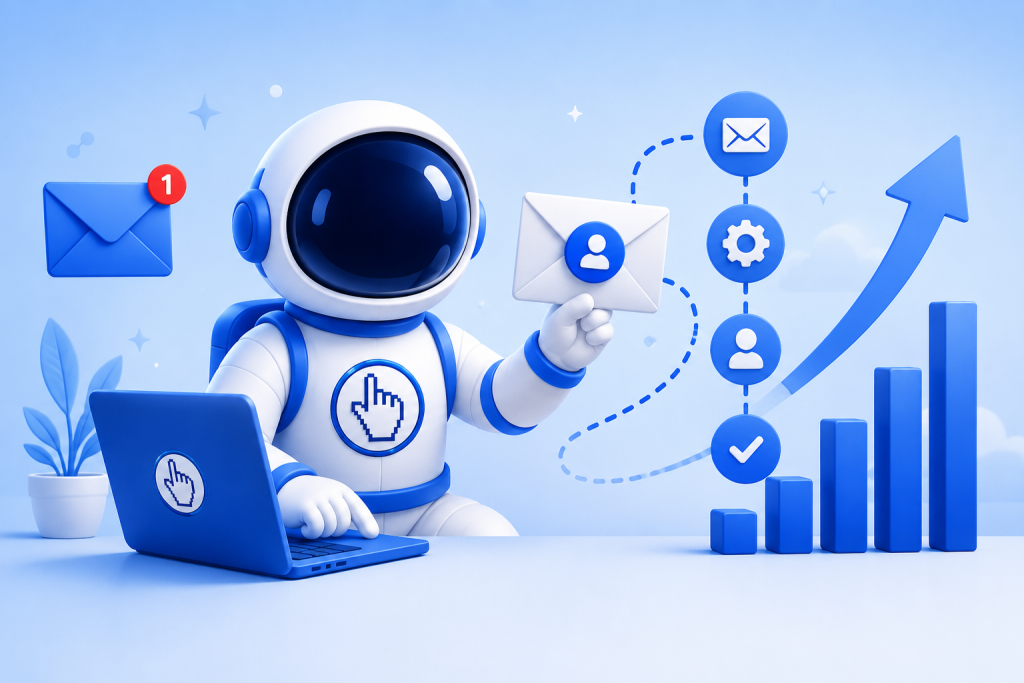
Email marketing is still one of the most effective ways to reach customers, but the way it works has changed. Sending the same message to your entire list is no longer enough to drive results. Customers now expect relevant, timely, and personalized communication that feels tailored to their needs.
This shift matters because inboxes are more crowded than ever. If your emails are not immediately useful or engaging, they will be ignored or deleted. At the same time, businesses that adapt are seeing stronger engagement, higher conversions, and better long-term customer relationships.
In this article, you will learn how personalization and automation are shaping email marketing in 2026, and how you can use both to improve your results without making your strategy more complicated.
Why Email Marketing Still Delivers Strong ROI
Email marketing continues to outperform many other channels because it reaches people directly and consistently. According to Mailchimp benchmarks, email remains a reliable driver of engagement across industries, with strong open and click rates when campaigns are relevant. Unlike social media, you are not dependent on algorithms to reach your audience. This makes email a stable and controllable channel for building relationships and driving conversions.
Owned Audience Advantage
Your email list is a marketing asset that you fully control. Unlike social media audiences, which can be affected by platform policy changes or declining organic reach, your subscriber list remains accessible and reliable for long-term communication. Businesses using social platforms to drive awareness should also focus on strategies that convert engagement into measurable sales.
This level of control allows businesses to create predictable campaigns and maintain stronger customer relationships without depending entirely on external platforms.
Consistent Customer Touchpoints
Email allows you to stay connected with your audience throughout the customer journey. Regular communication helps build familiarity, trust, and brand recognition over time.
Consistent touchpoints also make it easier to nurture leads, encourage repeat purchases, and keep your business top of mind when customers are ready to make a decision.
Personalization Is No Longer Optional
Generic email campaigns no longer perform well because audiences expect content that matches their needs and interests. Personalization helps your message stand out by making emails feel more relevant and useful to each recipient instead of appearing like mass communication.
Modern personalization goes far beyond simply adding a subscriber’s first name to a subject line. It now includes using behavioral data, purchase history, browsing activity, and audience preferences to deliver more targeted and meaningful content.
Behavior-Based Targeting
Behavior-based targeting uses customer actions to guide email campaigns. This can include tracking website visits, product views, purchases, abandoned carts, or interactions with previous emails.
By using this data, businesses can send more relevant messages that align with user intent, which often leads to higher engagement and better conversion rates.
Dynamic Content
Dynamic content allows different subscribers to see different content within the same email campaign. This means one email can automatically adjust based on factors like customer interests, location, or previous activity.
This approach improves relevance without requiring businesses to create multiple separate campaigns, making personalization more efficient and scalable.
Automation Makes Personalization Scalable

Automation allows businesses to deliver personalized messages at the right time without requiring constant manual work. Instead of sending isolated campaigns one by one, businesses can create automated workflows that continuously engage subscribers in the background.
As your audience grows, automation becomes essential for maintaining consistency and efficiency. It helps businesses nurture leads, recover lost sales, and maintain engagement while reducing the amount of repetitive work involved in email marketing.
Welcome Sequences
A welcome email sequence introduces new subscribers to your brand and sets expectations for future communication. This is often the first direct interaction after someone joins your email list.
Strong welcome sequences help build trust early, improve engagement, and guide subscribers toward taking meaningful actions such as making a purchase or exploring your services.
Abandoned Cart Emails
Abandoned cart emails target users who added products to their cart but did not complete their purchase. These automated reminders are highly effective because they focus on users who have already shown clear buying intent.
Including reminders, incentives, or product benefits in these emails can significantly improve recovery rates and increase revenue from otherwise lost opportunities.
Re-Engagement Campaigns
Re-engagement campaigns help reconnect with subscribers who have become inactive over time. These campaigns may include special offers, updated content, or simple reminders encouraging users to interact again.
Maintaining engagement with inactive subscribers helps improve overall list quality and ensures better long-term campaign performance.
Segmentation Improves Every Campaign
Segmentation divides your audience into smaller groups based on shared characteristics. This makes your emails more relevant and increases the likelihood of engagement. Even simple segmentation can significantly improve your results.
Demographic Segments
Demographic segmentation groups users based on factors like location, industry, company size, age group, or job role. This allows businesses to tailor messaging to specific audience types more effectively.
For example, a software company might send different messaging to small business owners compared to enterprise-level decision-makers.
Behavioral Segments
Behavioral segmentation focuses on how users interact with your business. This includes actions such as purchases, clicks, downloads, or browsing activity.
These segments often produce stronger conversion rates because they are based on actual user behavior and buying intent rather than general assumptions.
Timing and Frequency Matter More Than You Think
Sending emails at the right time can make a noticeable difference in performance. Too many emails can overwhelm your audience, while too few can reduce engagement. Finding the right balance is key.
Testing different send times helps identify when your audience is most active and responsive. The best timing can vary depending on factors like industry, audience demographics, and customer habits.
Analyzing engagement patterns allows businesses to schedule campaigns more strategically and improve overall performance.
Avoid Over-Sending
Sending too many emails can lead to audience fatigue and reduced engagement. Subscribers who feel overwhelmed may stop opening emails or unsubscribe entirely.
Focusing on quality rather than quantity helps maintain trust and ensures your emails continue to provide value to your audience.
Measuring What Actually Drives Conversions
Tracking performance helps you understand what is working and where to improve. Many businesses focus only on open rates, but deeper metrics provide better insights into success.
Focus on Clicks and Conversions
Click-through rates and conversions show how effective your emails are at driving action. These metrics are more meaningful than opens alone.
Use A/B Testing
Test subject lines, content, and calls to action. Small improvements can lead to significant gains over time.
Common Mistakes That Limit Email Performance
Many email strategies underperform because of avoidable mistakes. Identifying these issues can quickly improve your results without major changes.
Lack of Strategy
Sending emails without a clear objective often leads to inconsistent performance and weak engagement. Every campaign should have a specific goal, whether it is generating sales, nurturing leads, or increasing website traffic.
Clear strategy makes it easier to create focused messaging and measure campaign success effectively.
Ignoring Data
Failing to review campaign data means businesses miss valuable opportunities for improvement. Analytics provide insight into subscriber behavior and campaign effectiveness.
Using data consistently allows marketers to refine targeting, improve messaging, and make smarter decisions over time.
Turning Email Into a Reliable Growth Channel
Email marketing works best when it is consistent, targeted, and focused on delivering value. By combining personalization and automation, you can create a system that nurtures leads and drives conversions over time. This approach reduces manual effort while improving overall performance.
Start Simple and Scale
Businesses do not need advanced systems to begin improving email marketing performance. Starting with basic segmentation and simple automation workflows can already create meaningful improvements.
As more customer data becomes available, businesses can gradually refine their campaigns and expand their automation strategies.
Focus on Customer Experience
Every email should provide value to the subscriber, whether through useful information, relevant offers, or personalized recommendations. A strong customer experience builds trust and encourages long-term loyalty.
When subscribers consistently find your emails helpful, they are more likely to engage with future campaigns and remain connected to your brand.
Improve Your Email Strategy Today
If your email marketing is not delivering results, the issue is often a lack of personalization or structure. By focusing on the right data, building simple automation, and refining your messaging, you can turn email into one of your most effective channels.
Click Catalyst helps small businesses build email strategies that are clear, effective, and designed to convert. If you are ready to improve your results, now is the time to take a more structured approach.
Key Takeaways
- Email marketing remains a high ROI channel in 2026
- Personalization improves engagement and conversions
- Automation allows you to scale without increasing workload
- Segmentation makes campaigns more relevant and effective
- Timing and frequency impact performance significantly
- Data-driven decisions lead to continuous improvement