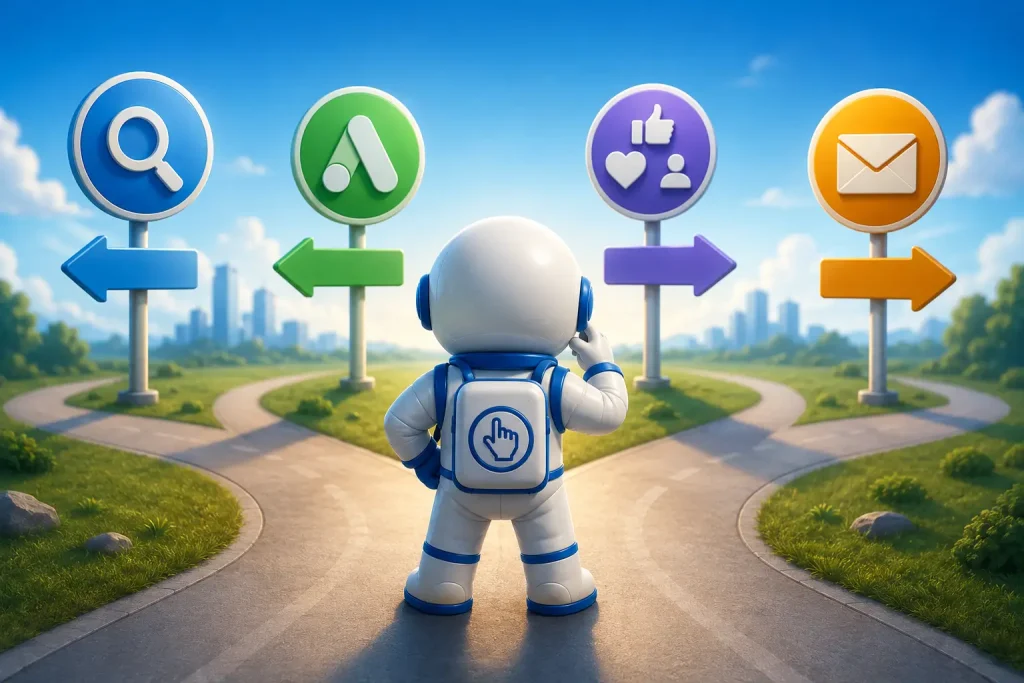
If you’re a small business owner trying to grow, you’ve probably heard conflicting advice about digital marketing. One person tells you to invest in SEO, another recommends Google Ads, while someone else insists social media is the key to success. With so many options available, it’s easy to feel overwhelmed and unsure where to begin.
The truth is, there isn’t a single marketing channel that’s right for every business. The best strategy depends on your goals, budget, timeline, and how your customers typically find and interact with businesses like yours. Choosing the wrong channel can lead to wasted time, money, and frustration.
This guide explains the strengths of SEO, Google Ads, social media, and email marketing so you can understand when each works best and make a more informed decision for your business.
Why Choosing the Right Marketing Channel Matters
Many businesses struggle with marketing because they start with a tactic instead of a strategy. They launch social media campaigns because competitors are doing it or invest in Google Ads without knowing if people are actively searching for their services. Taking time to understand how each channel works helps you invest your budget where it is most likely to produce results, rather than spreading yourself too thin across every platform.
SEO: Best for Long-Term Growth
Search Engine Optimization (SEO) helps your website appear in organic search results when people search for products or services you offer.
Unlike paid advertising, you don’t pay for every click. Instead, you invest in creating valuable content, improving your website, and building authority over time.
SEO is a good choice if:
- You want long-term, sustainable traffic.
- Your customers regularly search for your services on Google.
- You’re willing to invest several months before seeing significant results.
- You want to reduce dependence on paid advertising.
SEO may not be ideal if:
- You need leads immediately.
- Your business is brand new and has little online presence.
- You’re looking for quick wins.
Example: A plumbing company that consistently ranks for “emergency plumber near me” can receive qualified leads every month without paying for each individual click.
Google Ads: Best for Fast Lead Generation
Google Ads allows your business to appear at the top of search results almost immediately by paying for targeted keywords.
This is especially effective when customers already know what they need and are actively searching for it. Instead of waiting months to rank organically, you can begin reaching potential customers as soon as your campaigns are live. However, success depends on selecting the right keywords, writing effective ads, and directing visitors to well-designed landing pages.
Google Ads is a good choice if:
- You need leads quickly.
- Your services have strong search demand.
- You have a defined advertising budget.
- You want measurable and scalable campaigns.
Google Ads may not be ideal if:
- Your website doesn’t convert visitors.
- You don’t have conversion tracking in place.
- Your budget is extremely limited.
Example: A roofing contractor after a major storm can use Google Ads to appear when homeowners search for emergency roof repairs.
Social Media Marketing: Best for Brand Awareness and Engagement
Social media platforms help businesses connect with audiences, build trust, and stay visible between purchases.
While social media can generate leads, it often works best as a relationship-building channel rather than a direct sales tool. Customers may discover your business through helpful content, testimonials, behind-the-scenes updates, or educational videos before deciding to contact you.
Social media is a good choice if:
- Your business has strong visual content.
- You want to build brand recognition.
- You enjoy creating consistent content.
- Your audience spends time on platforms like Facebook, Instagram, LinkedIn, or TikTok.
Social media may not be ideal if:
- You’re expecting immediate sales from every post.
- You cannot consistently create new content.
- Your customers primarily search on Google when they need your services.
Example: A local bakery can use Instagram and Facebook to showcase new products, seasonal promotions, and customer reviews while staying top of mind within the community.
Email Marketing: Best for Turning Existing Customers Into Repeat Customers
Many businesses focus heavily on attracting new customers while overlooking the value of the ones they already have.
Email marketing helps you nurture leads, encourage repeat purchases, and build long-term customer relationships. Since you’re communicating with people who have already shown interest in your business, email often delivers one of the highest returns on investment among digital marketing channels.
Email marketing is a good choice if:
- You already have an email list.
- You want to improve customer retention.
- You regularly launch promotions or new products.
- You want to automate follow-up communications.
Email marketing may not be ideal if:
- You don’t have an audience yet.
- You’re relying on email as your only customer acquisition strategy.
Example: A dental clinic can send appointment reminders, oral health tips, and special offers to encourage repeat visits throughout the year.
Which Marketing Strategy Is Right for You?

Each marketing channel serves a different purpose, and many successful businesses combine multiple strategies as they grow. If your priority is generating leads quickly, Google Ads can help you reach customers who are actively searching for your products or services. Businesses focused on long-term website traffic often benefit from SEO, while those looking to increase brand awareness can build meaningful connections through social media. If your goal is to strengthen relationships with existing customers, email marketing is an excellent choice for encouraging repeat business and staying top of mind.
The right strategy also depends on your current business objectives. If you’re launching a new product or service, combining Google Ads with social media can help generate immediate visibility while building awareness. Businesses focused on sustainable online growth often see the best results by pairing SEO with email marketing, allowing them to attract new visitors while nurturing existing customers. Ultimately, the most effective marketing strategy depends on where your business is today and what you want to achieve over the next 6 to 12 months.
Questions to Ask Before Choosing a Marketing Channel
Before investing your marketing budget, ask yourself these questions:
Do people actively search for my product or service?
If yes, SEO and Google Ads are often strong options.
Do I need results immediately?
Google Ads can generate traffic much faster than SEO.
Do I already have customers I can market to?
If you have an existing customer base, email marketing can increase repeat business at a relatively low cost.
Does my business have strong visual appeal?
Restaurants, salons, fitness centers, and retail stores often perform well on social media because their products and services are easy to showcase visually.
Can I invest for the long term?
SEO typically requires patience but can provide lasting benefits once your website earns strong rankings.
The Best Strategy Is Often a Combination
Rather than asking which marketing channel is “best,” ask which channels solve your current business challenges.
For many small businesses, the most effective approach is a balanced strategy. Google Ads can generate immediate leads while SEO builds long-term visibility. Social media strengthens your brand and keeps your audience engaged, while email marketing helps convert one-time buyers into loyal customers. Together, these channels create a marketing system that supports growth at every stage of the customer journey.
Ready to Choose the Right Marketing Strategy?
If you’re unsure where to invest your marketing budget, start by understanding your business goals instead of chasing the latest trend. The right strategy depends on your industry, competition, timeline, and available resources.
At Click Catalyst, we help small businesses identify the marketing channels that align with their goals, whether that’s SEO, Google Ads, social media marketing, email marketing, or a combination of services. A clear strategy helps you invest with confidence and focus on the activities most likely to drive measurable results.
Key Takeaways
- Different marketing channels solve different business challenges.
- SEO is best for building long-term organic visibility.
- Google Ads is ideal for generating leads quickly.
- Social media strengthens brand awareness and customer relationships.
- Email marketing helps retain customers and increase repeat business.
- Many small businesses achieve the best results by combining multiple channels rather than relying on just one.