

Many small business owners invest time and money into digital marketing but struggle to see meaningful results. They launch websites, create social media profiles, run advertisements, and publish content, yet leads remain inconsistent and sales fail to grow as expected. This often leads to the belief that digital marketing does not work.
The reality is that digital marketing can be highly effective when the right strategies are in place. However, many businesses unknowingly make mistakes that limit their visibility, waste their budget, and prevent potential customers from taking action.
Understanding these common digital marketing mistakes can help you avoid costly setbacks and create a stronger foundation for long-term growth. In this guide, we’ll explore the most frequent errors small businesses make and how to fix them.
Starting Without a Clear Marketing Strategy
Many businesses jump into marketing activities without first defining their goals, target audience, or success metrics. This often results in disconnected campaigns that generate activity but not meaningful business outcomes. A clear strategy provides direction and ensures that every marketing effort supports a larger business objective.
Focusing on Tactics Instead of Goals
Businesses often choose marketing channels because competitors use them or because they seem popular. Instead, every marketing decision should be based on specific goals such as increasing leads, driving sales, or building brand awareness.
Failing to Define a Target Audience
When businesses try to market to everyone, they often connect with no one. Understanding your ideal customer helps create more relevant messaging and better-performing campaigns.
Ignoring Search Engine Optimization (SEO)
Many small businesses build a website and assume customers will automatically find it. Unfortunately, without SEO, even a well-designed website can remain invisible in search results. SEO helps search engines understand your content and connect it with people actively searching for your products or services.
Neglecting Keyword Research
Publishing content without understanding what customers are searching for can limit visibility. Keyword research helps identify opportunities to attract qualified traffic.
Overlooking Local SEO
For businesses serving specific geographic areas, local SEO is essential. Optimizing your Google Business Profile, collecting reviews, and targeting location-based keywords can significantly improve visibility.
Prioritizing Traffic Over Conversions
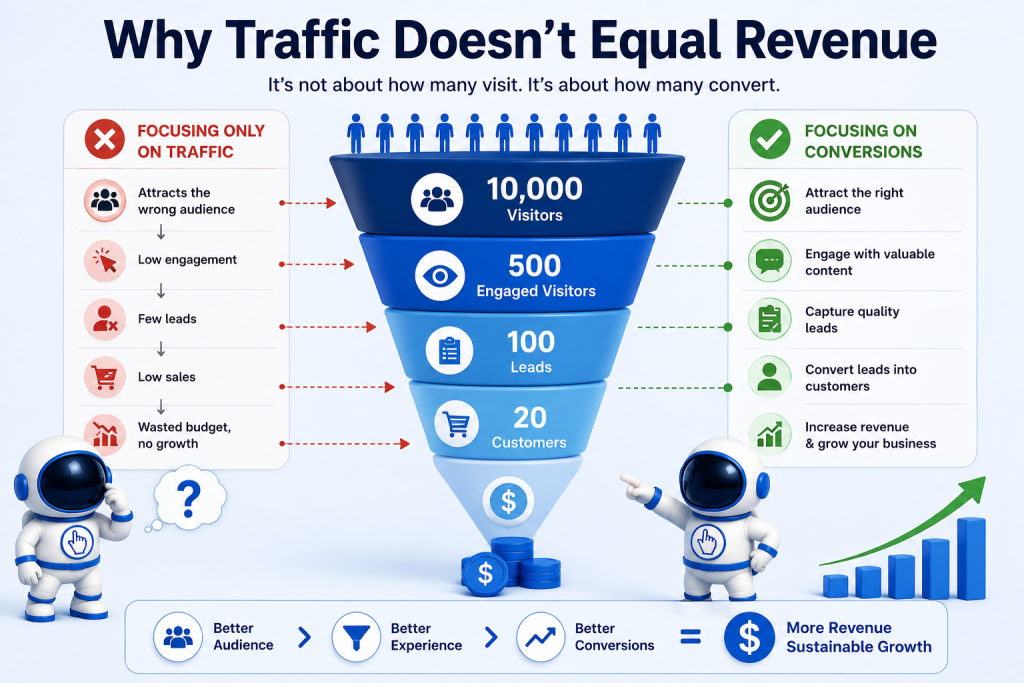
Website traffic is often viewed as a success metric, but traffic alone does not generate revenue. Businesses must focus on attracting qualified visitors through the right channels and converting them into customers. For example, understanding the differences between Google Ads and SEO can help determine which traffic sources are most likely to generate a positive return on investment.
Missing Clear Calls to Action
Visitors need guidance on what to do next. Without clear calls to action, potential customers may leave without engaging further.
Poor Landing Page Experience
Slow loading times, confusing layouts, and complicated forms can discourage visitors from converting, even when they are interested in your offer.
Treating Social Media as a Sales Platform Only
Many businesses use social media solely to promote products and services. While promotion is important, audiences typically engage more with content that educates, entertains, or solves problems. Constant sales messaging can reduce engagement and limit audience growth.
Posting Without a Content Strategy
Random posting often leads to inconsistent results. A content strategy helps maintain a balance between educational, promotional, and relationship-building content.
Ignoring Audience Engagement
Social media is designed for conversation. Responding to comments, messages, and questions helps build trust and strengthen customer relationships.
Failing to Track Marketing Performance
One of the biggest digital marketing mistakes is making decisions without data. Businesses often continue investing in channels or campaigns without understanding whether they are producing results. Tracking performance allows you to identify what is working and where improvements are needed.
Not Using Analytics Tools
Platforms such as Google Analytics and advertising dashboards provide valuable insights into user behavior, traffic sources, and conversions.
Measuring the Wrong Metrics
Metrics like likes and page views can be helpful, but they do not always reflect business growth. Focus on leads, sales, conversion rates, and return on investment whenever possible.
Neglecting Email Marketing
Despite the rise of social media and paid advertising, email marketing remains one of the most effective digital marketing channels. Many businesses overlook its potential and miss opportunities to nurture leads and retain customers.
Not Building an Email List
Owning your audience through email provides a direct communication channel that is not dependent on changing social media algorithms.
Sending Inconsistent Communications
Irregular email campaigns make it difficult to stay top of mind. Consistent communication helps build familiarity and trust over time.
Expecting Immediate Results
Digital marketing is not an overnight solution. Channels such as SEO, content marketing, and audience building often require months of consistent effort before significant results appear. Unrealistic expectations can cause businesses to abandon effective strategies too soon.
Comparing Results to Larger Competitors
Established brands often have larger budgets, stronger authority, and more resources. Focus on steady improvement rather than direct comparison.
Changing Strategies Too Frequently
Constantly switching tactics prevents campaigns from gathering enough data to optimize performance. Consistency is often the key to long-term success.
Overlooking Website User Experience
Your website is often the first impression potential customers have of your business. Even strong marketing campaigns can underperform if visitors encounter a poor user experience. A website should make it easy for users to find information and take action.
Slow Website Speed
Users expect fast-loading websites. Delays can increase bounce rates and reduce conversions.
Difficult Navigation
Visitors should be able to quickly locate important information such as services, pricing, contact details, and trust signals.
Creating Content Without Customer Intent
Content should address the questions, concerns, and goals of your target audience. Publishing content solely for search engines or without understanding customer intent often leads to poor engagement and low conversion rates.
Focusing Only on Keywords
Keywords are important, but content should prioritize solving real customer problems.
Ignoring Different Funnel Stages
Customers need different information depending on where they are in the buying process. Content should support awareness, consideration, and decision-making stages.
How to Avoid These Digital Marketing Mistakes
The most successful digital marketing strategies are built on clear goals, audience understanding, consistent execution, and ongoing optimization. Rather than chasing every new trend, focus on building a strong foundation that aligns with your business objectives. Small improvements made consistently often generate better long-term results than frequent major changes.
By identifying and correcting these common mistakes, small businesses can improve visibility, generate more qualified leads, and achieve a stronger return on their marketing investment.
Ready to Improve Your Digital Marketing Results?
The good news is that most digital marketing mistakes can be corrected. Whether you need help with SEO, paid advertising, content marketing, or a complete strategy overhaul, the right approach can improve visibility, generate better leads, and increase revenue over time. Explore our digital marketing services to learn how we help businesses turn marketing efforts into measurable growth.
Key Takeaways
- Many marketing problems stem from a lack of strategy rather than a lack of effort.
- SEO remains one of the most important long-term visibility channels.
- Website traffic is valuable only when it leads to conversions.
- Social media should focus on engagement, not just promotion.
- Data and analytics are essential for making informed marketing decisions.
- Email marketing remains a powerful tool for nurturing leads.
- Digital marketing requires consistency and realistic expectations.
- User experience directly impacts conversion rates.
- Content should align with customer intent and buying stages.
- Small improvements can lead to significant long-term growth.